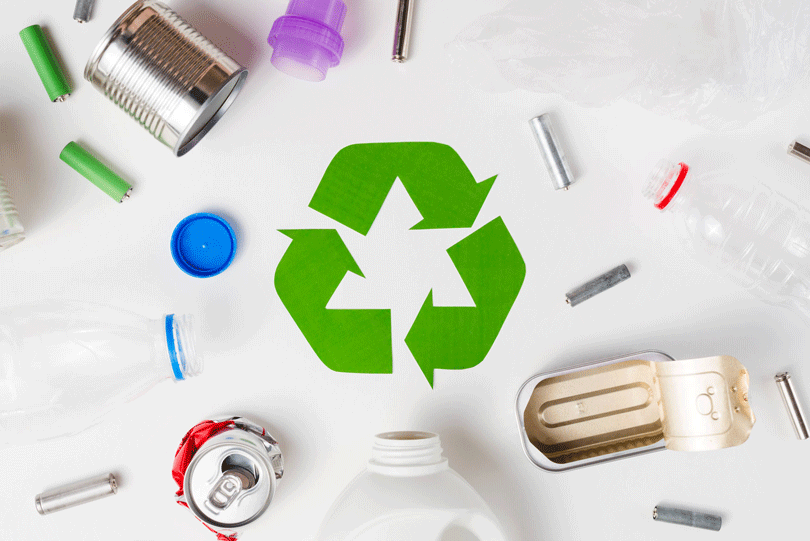


On June 17, 2026, Taiwan's Ministry of Environment (MOENV) promulgated the revised Resource Recycling Act, which was officially renamed the Resource Circulation Promotion Act. The revision aims to align with global trends in climate action and the circular economy by transforming the traditional "end-of-pipe waste management" model into a resource circulation system covering the entire product lifecycle. Except for provisions on mandatory product green design and related penalties, which are subject to a two-year transition period, all other revised provisions will enter into force upon promulgation.1
Since its enactment in 2002 and amendment in 2009, the former Resource Recycling Act primarily focused on waste recycling and reuse. The revised Resource Circulation Promotion Act adopts a more proactive approach by extending regulation across the entire product lifecycle and establishing a comprehensive framework covering green design, source reduction, sustainable consumption, and producer responsibility mechanisms. While the revised Act establishes the overall regulatory framework, many of these measures remain subject to further implementation rules and detailed requirements to be issued by the MOENV. The key regulatory measures currently set out in the revised Act are summarized below.
Regulatory Area | Regulatory Measure | Scope | Key Points |
Green Design | Green Design | Specified types and scales of products, and designated construction projects | The MOENV will establish green design principles addressing recyclable material use and content, product durability, product repairability, product upgradability, and restrictions on environmentally harmful substances. Businesses involved in designated products or construction projects may be required to comply with the green design criteria, and submit green design documentation for approval. |
Source Reduction | Reuse and Reduction | Designated products or their packaging and containers | The MOENV may establish reuse and reduction targets and implementation measures. Relevant businesses shall submit reuse or reduction plans, as applicable, and report on their implementation results. |
Product Restrictions | Products, packaging, or containers that excessively consume resources, contain hazardous substances, are difficult to recycle, or may cause serious environmental pollution | The MOENV may prohibit or restrict the manufacture, import, sale, or use of such products, packaging, or containers. Relevant businesses are required to submit information on production, sales, usage, and sources of raw materials for record-keeping purposes. | |
Packaging Restrictions and Reduction | Transport packaging or sales packaging of designated products | The MOENV may establish packaging reduction targets, and requirements regarding packaging space ratios, the number of packaging layers, and the types and quantities of packaging materials. Relevant businesses shall comply with these requirements and submit reports on implementation results. | |
Product Lifetime Extension | Designated products | The MOENV may set targets and specify methods for extending product lifetimes. Relevant businesses shall extend product lifetimes through measures such as take-back services, refill systems, leasing, deposit-return schemes, buy-back services, repair services, and extended warranties, and report on implementation results. | |
Sustainable Consumption | Circulation Mark and Green Mark | Circular products, circular services, and eligible green products and services | Relevant businesses may apply for authorization to use the Circulation Mark or Green Mark for eligible products and services and shall use such marks in accordance with applicable requirements. Unauthorized use, alteration, or misuse of such marks is prohibited. |
Information Disclosure | Designated products or their packaging and containers | Relevant businesses shall disclose information in accordance with the prescribed methods, including material composition, recycled material content, packaging information, repairability, durability, and recycling and dismantling methods. | |
Resource Recycling Management | Producer Responsibility | Manufacturers, importers, sellers, or users of designated products, packaging, or containers | Designated businesses shall jointly establish or join existing Producer Responsibility Organizations (PROs), develop recycling plans, and assume financial and operational responsibilities for the collection, removal, and recycling of recyclable resources. |
Recycled Resource Management | Designated recyclable resource categories | The MOENV may restrict or prohibit the import or export of designated recyclable resources. Businesses seeking to import or export such recyclable resources shall obtain a permit from the competent local authority prior to import or export. |
In terms of policy support, the revised Act introduces a range of incentives for enterprises, organizations, and individuals engaged in resource circulation activities, including grants and subsidies, as well as prioritized access to financing channels and credit guarantees. In addition, government agencies, public schools, and public enterprises are required to prioritize the procurement of products and services bearing the Green Mark and Circulation Mark, creating more stable market opportunities for businesses supporting circular economy development. These measures are expected to reduce the financial burdens and implementation challenges associated with the transition toward a circular economy, encourage green technology innovation, and facilitate the transformation of industries toward more circular models.